Sample Room Dispatch #1
The Super Bowl Outfits That Almost Made It On Stage

Three days before the deadline, I got a message from a stylist working on the Super Bowl halftime show with Bad Bunny. They needed outfits for 38 dancers. The catch was that other costumes had already been approved. For productions like the Super Bowl, every garment typically goes through layers of approvals including creative direction, production teams, network standards, and several other departments responsible for what appears on television.
By the time the show day arrives, the wardrobe is usually locked in, but in productions at this scale, last-minute changes still happen. A creative director might decide something feels wrong on camera. Lighting tests can expose camera reflections in shiny garments…etc. Stylists often prepare backup options.
That’s where I came in. They wanted to be prepared in case the creative team decided to pivot at the last minute. If that happened, my designs would be ready. Of course, everyone involved quietly hoped the creative team might fall in love with them. Some key points to note:
I had three Days to Knit 152 panels.
There were 38 dancers.
Each dancer needed a pair of shorts and a matching bralette.
Each pair of shorts and each bralette both require two knit panels, which meant I had to produce 152 panels in three days.
All of them would be knitted on my industrial knitting machines.If you’ve never seen one of these machines run, it’s a rhythmic mechanical process that builds fabric row by row at high speed. It’s incredibly efficient, but it’s still sequential. One panel finishes before the next begins, which means the math becomes very real very quickly.
The Studio
By the second night, the studio floor was covered in finished knit panels stacked in neat piles. The machines were loud, metal needles moving rapidly back and forth, building the fabric one line at a time. Panels would slide off the machine warm and slightly curled at the edges. Then the next one would start.
This is the pair of shorts that came out of that three-day sprint.
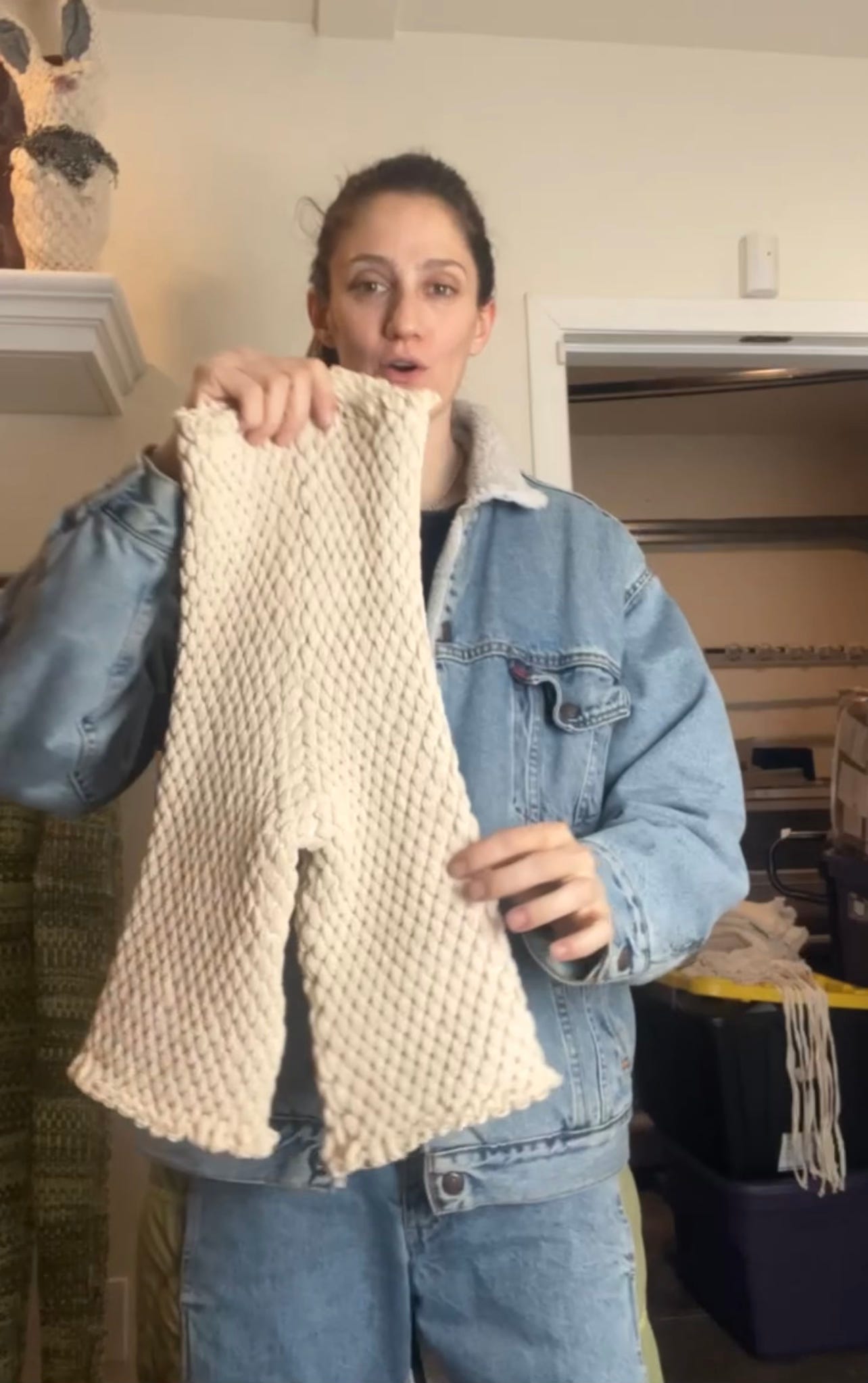
At that point, the goal was simple, keep the machines running.
When Machines Start Fighting Back
The timeline was already tight. From the beginning, one of the knitting machines was having technical issues and it only got worse from there. Mid-way through day 2, I wasn’t able to use the second machine at all.
Anyone who works with machinery knows that moment when a small problem suddenly feels enormous because there’s no time buffer.
A tension issue.
A dropped stitch.
A panel that doesn’t knit cleanly.
Under normal circumstances, you stop and troubleshoot. Under a Super Bowl deadline, you keep moving, barely sleep, and hope the other machine cooperates. The machines ran almost constantly.
Panel after panel came off the machine. Eventually all 152 were finished.
Game Day
Once the garments were delivered, everything moved back into the world of production decisions.
Large televised performances like the Super Bowl involve dozens of creative elements moving simultaneously: lighting, staging, choreography, camera blocking, wardrobe. Multiple costume options are often prepared. Not all of them make it onto the stage.
In this case, the originally approved outfits remained the final choice for the performance. My designs didn’t end up on the dancers during the halftime show and that’s actually very normal in production environments like this.
Where the Shorts Ended Up
After the show, the stylist gathered the dancers and handed out the garments. She later told me the room felt like Christmas because several dancers knew of my brand and were really excited by the prospect of wearing Knorts.Each dancer went home with a pair. For garments originally produced as contingency pieces, that felt like a pretty good outcome and left me with a warmed heart.
The Unexpected Second Life
While all of this was happening, I had been documenting parts of the process.
Machines running.
Panels stacking up.
The pace of the work.
Later I posted some of those clips. I wasn’t expecting much from them. But the videos started circulating and eventually went viral. A lot of people became fascinated with the behind-the-scenes process of producing garments under that kind of time pressure.
Then the comments started coming in. Over and over again.
“Can we buy the shorts?”
Making a Version for Everyone Else
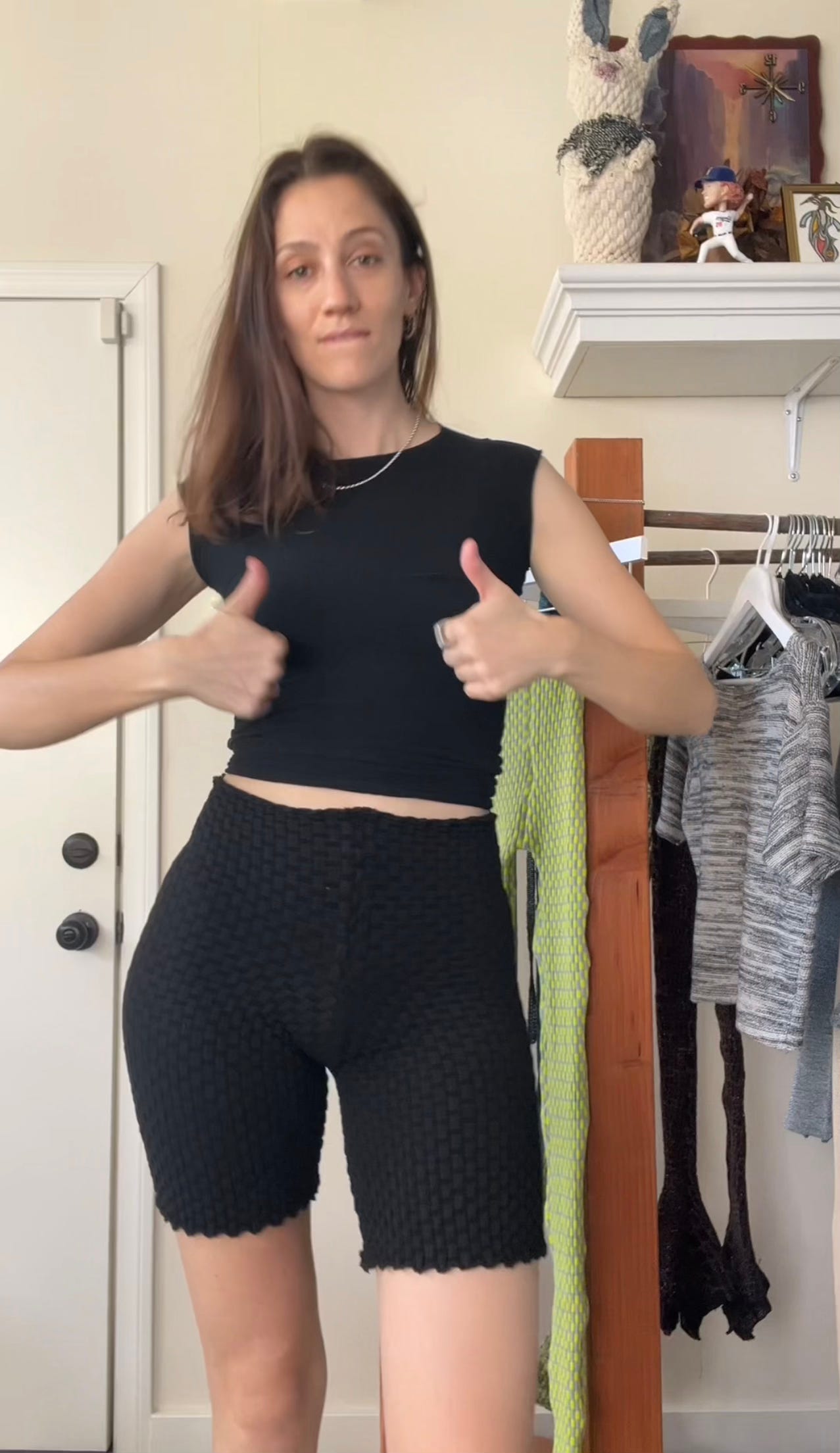
The original garments were produced for a very specific context: stage costumes made under an extremely tight timeline, because so many people asked about them, I decided to produce a small run designed to work for my audience. I ended up calling them the Halftime Show Shorts for obvious reasons. It’s a small studio batch that came out of that moment.
If you were one of the people asking about them after the videos went viral, you can see them here:
Super Bowl Halftime Show Shorts
The Work That Happens Behind the Scenes
Fashion is full of moments like this. Garments are designed, produced, and perfected for events that may or may not unfold the way anyone expects. Entire wardrobes can be created for performances where only a fraction of the work is ever seen.
A lot of the labor behind clothing exists quietly behind the scenes. Sometimes the garments still find their way into the world anyway and sometimes the story of how they were made becomes just as interesting as the clothes themselves.
I’m planning to start sharing more stories like this from the studio.
There are a lot of strange, chaotic, and fascinating moments that happen between the idea for a garment and the moment it ends up in someone’s hands.
This felt like a good place to start.
More soon,
E